> For the complete documentation index, see [llms.txt](https://docs.devolutions.net/llms.txt). Markdown versions of documentation pages are available by appending `.md` to page URLs; this page is available as [Markdown](https://docs.devolutions.net/rdm/de/knowledge-base/how-to-articles/turn-off-the-built-in-password-manager-in-your-browser.md).
# Den integrierten Passwort-Manager in Ihrem Browser deaktivieren
Deaktivieren Sie die Aufforderung des integrierten Passwort-Managers in Chrome, Firefox, Edge, Safari und Internet Explorer Schritt für Schritt.
Hier sind die Schritte, um zu verhindern, dass der integrierte Passwort-Manager Ihres Browsers anbietet, Ihre Passwörter zu speichern.
### Chrome
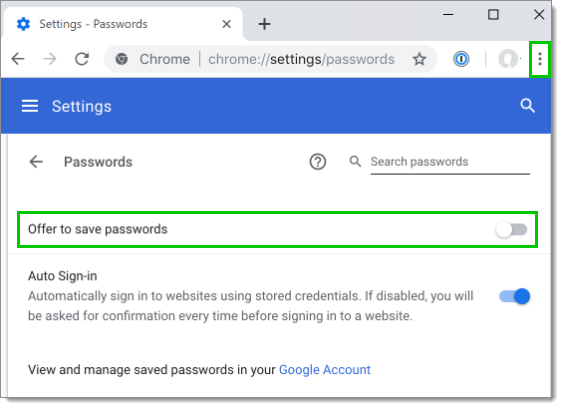
1. Klicken Sie auf das Chrome-Menü in der Symbolleiste und wählen Sie ***Einstellungen***.
2. Klicken Sie unter ***AutoFill*** auf ***Passwörter***.
3. Deaktivieren Sie ***Speichern von Passwörtern anbieten***.
### Firefox
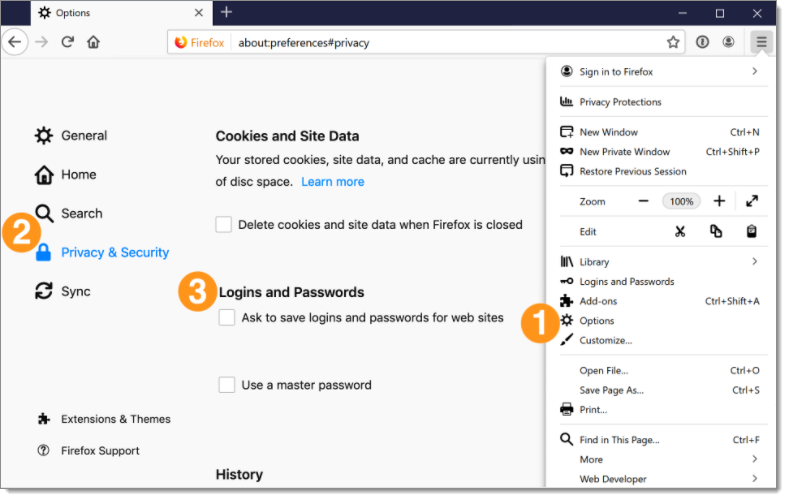
1. Klicken Sie auf das Firefox-Menü in der Symbolleiste und wählen Sie ***Optionen*** (***Einstellungen*** in macOS).
2. Klicken Sie auf ***Datenschutz & Sicherheit***.
3. Deaktivieren Sie ***Fragen, ob Zugangsdaten und Passwörter für Websites gespeichert werden sollen***.
### Microsoft Edge
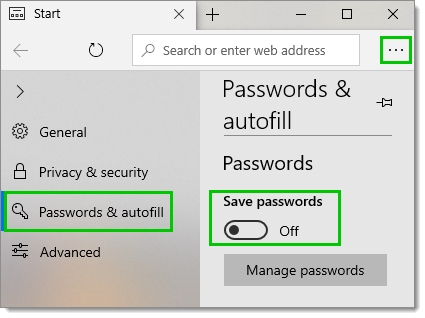
1. Klicken Sie auf das Edge-Menü in der Symbolleiste und wählen Sie ***Einstellungen***.
2. Klicken Sie auf ***Passwörter und AutoFill***.
3. Deaktivieren Sie ***Passwörter speichern***.
### Safari
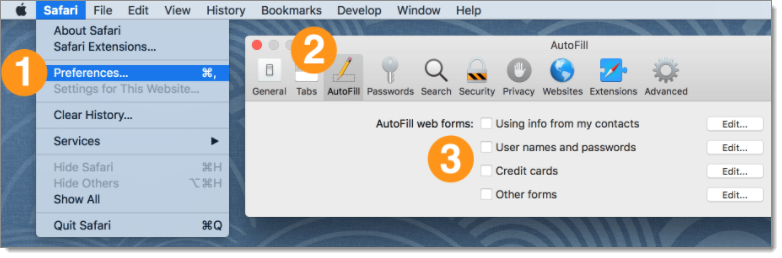
1. Klicken Sie auf das Safari-Menü und wählen Sie ***Einstellungen***.
2. Klicken Sie auf das Symbol ***AutoFill***.
3. Deaktivieren Sie alle Einstellungen für das automatische Ausfüllen von Webformularen: ***Informationen aus meinen Kontakten verwenden***, ***Benutzernamen und Passwörter***, ***Kreditkarten*** und ***Sonstige Formulare***.
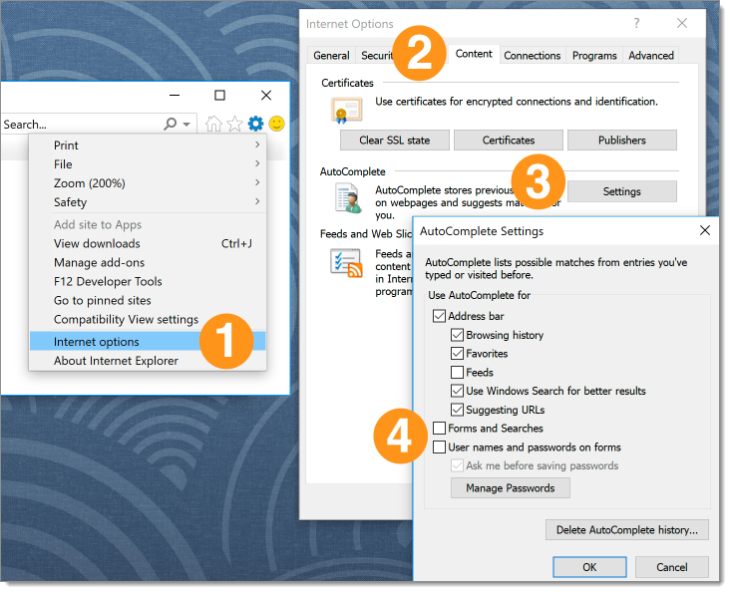
### Internet Explorer
1. Klicken Sie auf das Menü Einstellungen und wählen Sie ***Internetoptionen***.
2. Klicken Sie auf die Registerkarte ***Inhalte***.
3. Klicken Sie im Abschnitt ***AutoVervollständigen*** auf ***Einstellungen***.
4. Deaktivieren Sie ***Formulare und Suchen*** sowie ***Benutzernamen und Passwörter in Formularen*** und klicken Sie dann auf ***OK***.
---
# Agent Instructions
This documentation is published with GitBook. GitBook is the documentation platform designed so that both humans and AI agents can read, navigate, and reason over technical content effectively. Learn more at gitbook.com.
## Querying This Documentation
If you need additional information that is not directly available in this page, you can query the documentation dynamically by asking a question.
Perform an HTTP GET request on the current page URL with the `ask` query parameter, and the optional `goal` query parameter:
```
GET https://docs.devolutions.net/rdm/de/knowledge-base/how-to-articles/turn-off-the-built-in-password-manager-in-your-browser.md?ask=&goal=
```
`ask` is the immediate question: it should be specific, self-contained, and written in natural language.
`goal` is optional and describes the broader end goal you are ultimately trying to accomplish on behalf of the user. GitBook uses it to tailor the answer towards what is most useful for that goal.
The response will contain a direct answer to the question and relevant excerpts and sources from the documentation.
Use this mechanism when the answer is not explicitly present in the current page, you need clarification or additional context, or you want to retrieve related documentation sections.